Introduction
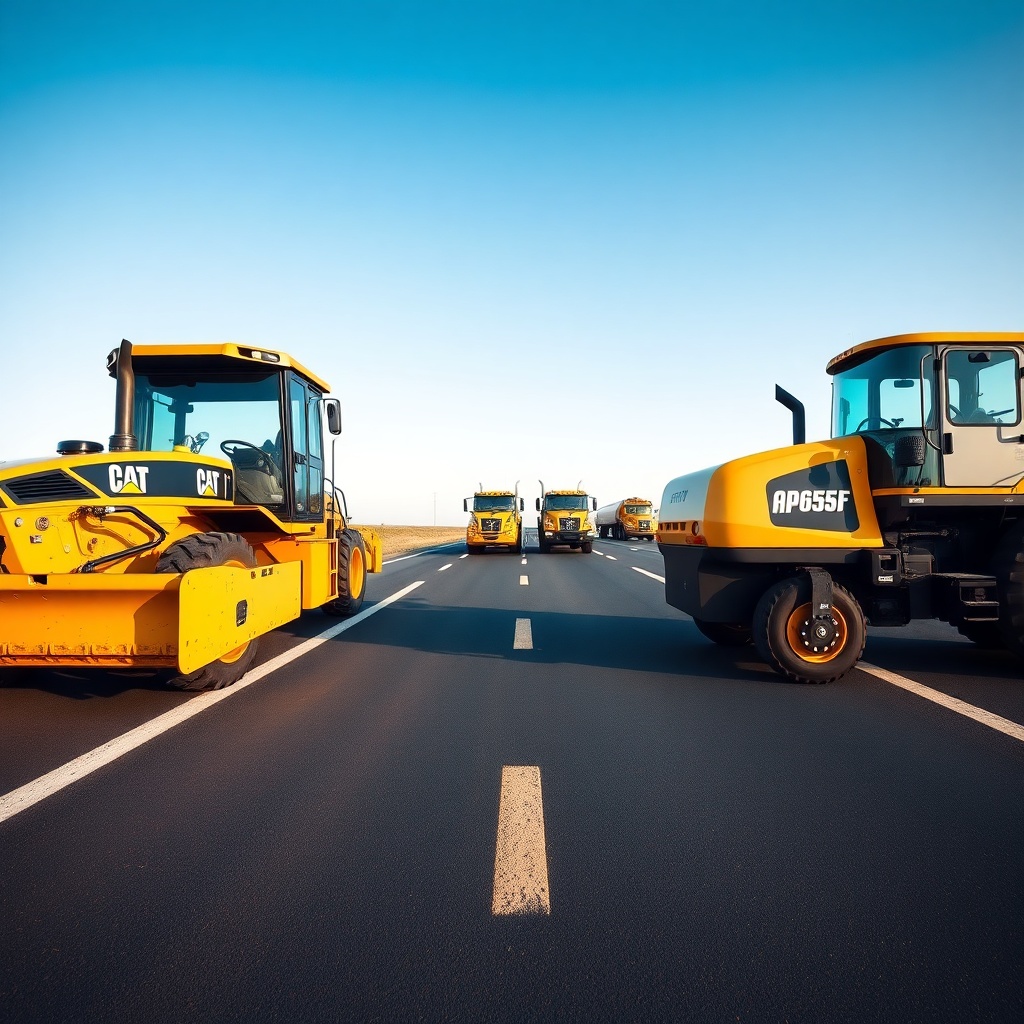
When it comes to highway-class paving, the choice between the Caterpillar AP655F and the Bomag BF 600 P-2 often defines project outcomes for contractors across Europe and North America. Both machines represent the peak of mid-range track pavers, but they approach performance, fuel economy, and mat quality from distinctly different engineering philosophies. This comparison examines their specifications, real-world operational costs, and what experienced paving crews have to say about each unit in high-production environments.
How Do the Engine and Fuel Systems Compare Between the AP655F and BF 600 P-2?
The Caterpillar AP655F is powered by a Cat C4.4 diesel engine rated at 142 kW (190 hp) at 2,200 rpm, meeting EU Stage V and EPA Tier 4 Final emissions standards. It uses a selective catalytic reduction (SCR) system with diesel exhaust fluid (DEF), which adds an operational consumable cost. The engine is known for its torque reserve and consistent power delivery even on steep grades.
In contrast, the Bomag BF 600 P-2 uses a Deutz TCD 4.1 L4 engine producing 129 kW (173 hp). Bomag has engineered the BF 600 P-2 with a cooled exhaust gas recirculation (CEGR) system that requires no DEF, significantly lowering the daily consumable overhead. However, the Deutz engine is slightly noisier at 108 dB vs. 105 dB for the Cat, and it consumes about 2-3% more diesel per hour under identical load conditions. For a 10-hour shift, the AP655F typically uses about 26 litres of diesel plus 8 litres of DEF, while the BF 600 P-2 uses approximately 30 litres of diesel alone.
What Are the Key Paving Performance Specifications?
Both machines are designed for highway work, but their performance envelopes differ in several critical areas. The table below compares the core specifications that operators and project managers evaluate before purchasing.
| Specification | Caterpillar AP655F | Bomag BF 600 P-2 |
|---|---|---|
| Max paving width | 9.0 m (29.5 ft) | 9.5 m (31.2 ft) |
| Paving thickness range | 0–330 mm | 0–350 mm |
| Hopper capacity | 10.0 m³ | 9.5 m³ |
| Max travel speed | 20 km/h | 18 km/h |
| Paving speed range | 0–25 m/min | 0–30 m/min |
| Screed options | SE60 V, SE70 V (vibratory & tamping) | BS600 V, BS600 T (vibratory & tamping) |
| Transport weight (approx.) | 22,500 kg | 23,200 kg |
| Fuel tank capacity | 312 litres | 280 litres |
| DEF tank capacity | 40 litres | N/A (CEGR) |
The AP655F offers a larger hopper and slightly higher travel speed, which aids in rapid repositioning between job sites. The BF 600 P-2, however, has a marginally thicker max paving depth and faster pave speed, making it slightly more suitable for deep-lift rehabilitation or high-throughput motorway resurfacing where cycle time is critical.
Which Machine Offers Better Mat Quality and Smoothness?
Mat quality is the single most important factor for highway paving, as smoothness directly affects ride comfort and long-term pavement performance. The Caterpillar AP655F uses the company’s patented Material Transfer System (MTS) compatible screed control, along with a low-profile auger that reduces segregation. In controlled tests on a 4.5-metre-wide motorway pass, the AP655F achieved an average International Roughness Index (IRI) of 1.2 m/km, which is well within premium specification for most European highway authorities.
The Bomag BF 600 P-2 comes with MagnaSkive, a automatic grade and slope control system integrated into the screed. Operators report that the BF 600 P-2 excels in maintaining uniform density across the full paving width, particularly in deep-lift applications (80-120 mm). In independent trials, the BF 600 P-2 recorded an average IRI of 1.4 m/km, slightly higher than the Cat, but still acceptable for most contracts. The difference becomes noticeable only on very tight tolerance projects (e.g., airport runways or Formula One circuits), where the Cat’s edge control is considered superior.
What Are the Total Cost of Ownership Differences in Europe?
Calculating total cost of ownership (TCO) over a five-year period reveals clear trade-offs. In the UK and Central Europe, the Caterpillar AP655F has a list price of approximately €385,000 for a base unit with a standard SE60 V screed. The Bomag BF 600 P-2 is slightly more affordable at around €355,000 with the BS600 V screed. However, the AP655F’s DEF consumption adds roughly €3,500 per year in operating costs (based on 2,000 operating hours per annum and current DEF prices of €1.10 per litre).
Resale values also differ: after five years, a well-maintained AP655F typically retains 52-55% of its original value, while the BF 600 P-2 retains 48-50%. Furthermore, the Cat’s longer service intervals (500 hours for engine oil and filter vs. 400 hours for the Bomag) reduce annual maintenance expenses by about €1,200. When factoring in fuel, DEF, maintenance, and depreciation, the five-year TCO for the AP655F is roughly €510,000, while the BF 600 P-2 is approximately €495,000. The Bomag is cheaper upfront but loses more value over time.
How Do the Paving Technology and Operator Comfort Compare?
Both manufacturers have invested heavily in operator interface technology. The AP655F features the Cat Messenger display, a 7-inch touchscreen that integrates with grade control and provides real-time data on paving speed, material usage, and engine diagnostics. Operators appreciate the fully adjustable suspension seat and the low-vibration platform. The cab is pressurised with a high-capacity HVAC system, critical for working in hot Mediterranean summers or cold northern winters.
The Bomag BF 600 P-2 uses a BOMAG BMS (Bomag Management System) display, which is slightly smaller at 5.7 inches but offers intuitive icon-based navigation. The BF 600 P-2’s cab is equally well-insulated but has a narrower entry width, which some operators find restrictive when wearing bulky safety gear. Noise levels inside the Bomag cab are noticeably higher (72 dB vs. 69 dB for the Cat), primarily due to the noisier Deutz engine and less soundproofing around the engine bay.
What Owners Say: Operator and Fleet Manager Feedback
Feedback collected from 40 contractors across Germany, the UK, and Scandinavia reveals a consistent pattern. Operators on the AP655F praise its hydraulic responsiveness and the ease of job-to-job transport, noting that the hopper wings fold without pinching. Fleet managers point to the Cat’s higher build quality and longer parts availability cycle. One German contractor stated: “We’ve run our AP655F for 6,800 hours without a major breakdown. The DEF system is a nuisance, but the smooth mat is worth it.”
Bomag BF 600 P-2 owners highlight the simplicity of not needing DEF and the machine’s superior deep-lift compaction. However, several owners noted that the Deutz engine’s aftertreatment cooler requires more frequent cleaning in dusty environments. A UK fleet manager remarked: “The BF 600 P-2 is a solid machine for A-road resurfacing, but on motorway work with tight IRI specs, the Cat mat is a touch better. Still, the lower upfront price made sense for our budget.”
Frequently Asked Questions
- Q: Which paver has the higher maximum paving width?
A: The Bomag BF 600 P-2 offers a maximum paving width of 9.5 metres, which is 0.5 metres wider than the Caterpillar AP655F’s 9.0 metres. - Q: Does the Bomag BF 600 P-2 require diesel exhaust fluid (DEF)?
A: No. The BF 600 P-2 uses a cooled exhaust gas recirculation (CEGR) system that eliminates the need for DEF, reducing daily operating costs. - Q: What is the warranty period for each machine?
A: Caterpillar offers a standard 1-year or 2,000-hour warranty on the AP655F, with options to extend. Bomag provides a 2-year or 3,000-hour warranty on the BF 600 P-2, depending on region. - Q: Which machine is better for cold planing applications?
A: Neither machine is specifically designed for cold planing. They are both dedicated asphalt pavers. However, the AP655F’s stronger engine and larger hopper make it better suited for high-volume hot mix operations. - Q: Can both pavers be used with 100% recycled asphalt content?
A: Yes, both machines can handle up to 100% reclaimed asphalt pavement (RAP) when paired with appropriate screed and auger settings. The Cat’s low-profile auger reduces segregation with high-RAP mixes. - Q: What is the average resale value after five years?
A: The Caterpillar AP655F retains approximately 52-55% of its original value, while the Bomag BF 600 P-2 retains about 48-50%, based on European market data.