
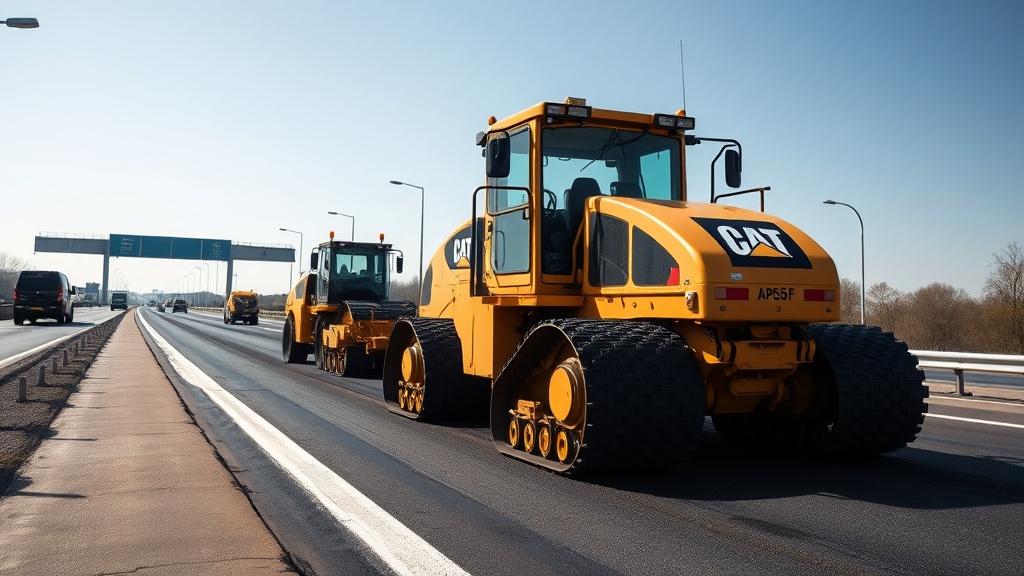
Optimizing Your Paving Train with Caterpillar AP655F and Bomag BF 600 P-2
In the competitive world of asphalt paving, the synergy between a main paver and a compact screed operator can make or break a job. The combination of a Caterpillar AP655F as the lead paver and a Bomag BF 600 P-2 as the secondary unit forms a high-efficiency paving train that delivers superior mat quality and productivity. This article examines how these two machines work together, their individual strengths, and how to maximize your return on investment on UK highways and large commercial projects.
What specific advantages does the Caterpillar AP655F bring to a paving train?
The Caterpillar AP655F is a heavy-duty tracked paver designed for mainline and highway paving. Its primary advantage lies in its powerful C4.4 engine, which delivers robust torque even at low idle, ensuring consistent material flow through the hydraulically driven auger and conveyor system. With a standard paving width of 2.55 m and maximum widths up to 9.5 m using extensions, it handles high tonnage volumes typical of UK trunk road A1 and M-class motorways. The AP655F’s Cat Grade Control system provides precision grade and slope control, reducing the need for manual adjustment and improving final surface smoothness. Its direct-drive electric motors on the conveyors minimise maintenance downtime, a critical factor when meeting tight project deadlines. For operators, the spacious cab with adjustable seat and large touchscreen display enhances visibility and comfort over long shifts.
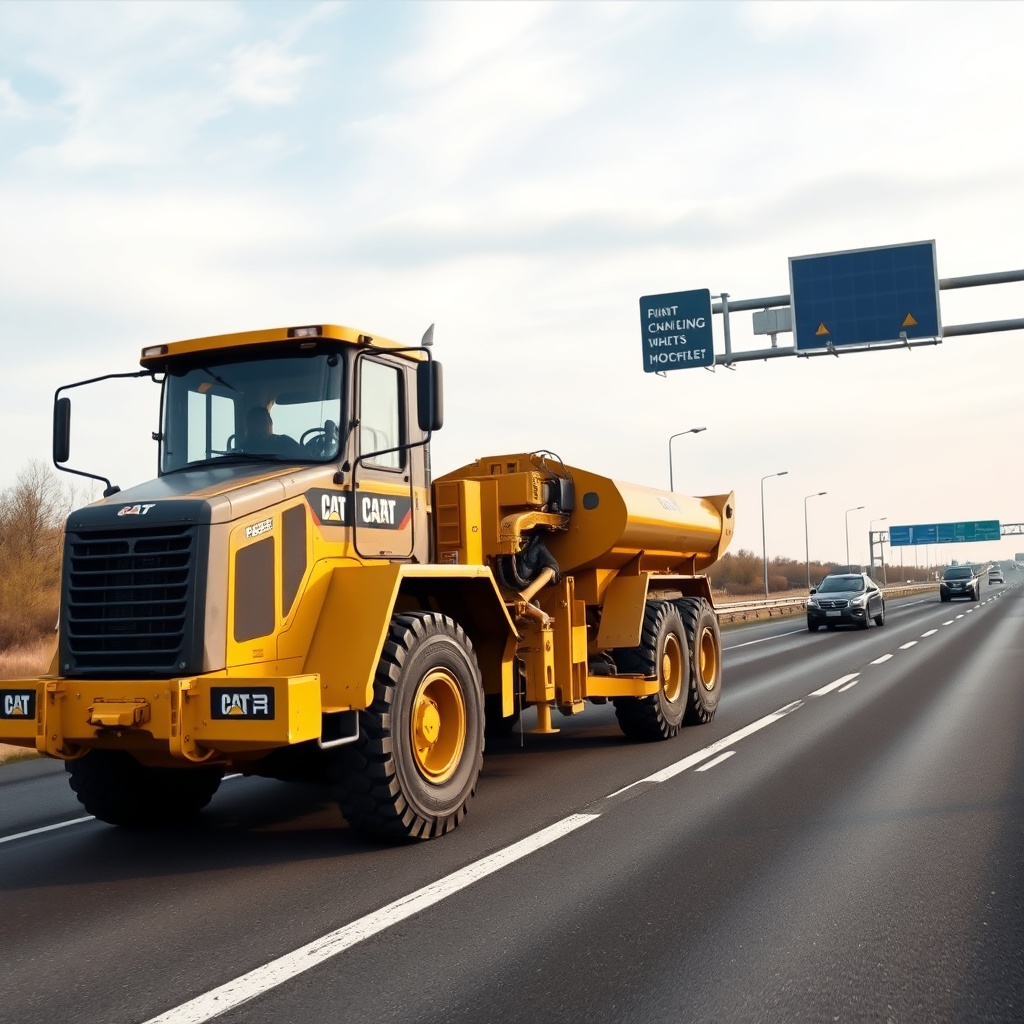
How does the Bomag BF 600 P-2 complement the Caterpillar AP655F in tight spaces?
The Bomag BF 600 P-2 is a compact, high-performance wheeled paver that excels in areas where the larger AP655F cannot easily access. Its tight turning radius of just 3.2 m makes it ideal for roundabouts, slip roads, car parks, cycle paths, and footway tie-ins. The BF 600 P-2 features Bomag’s ECO heater system for the screed, which uses diesel-fired heating elements to maintain consistent bar temperature without excessive engine load. This reduces fuel consumption and emissions, aligning with UK sustainability targets. With a standard paving width of 1.3 m to 3.2 m, it is perfectly suited for secondary layers or finishing passes behind the main paver. The unit’s hydrostatic drive ensures smooth start-up and stops, critical when matching joints with the AP655F’s laid mat. The BF 600 P-2 also boasts an intuitive control panel, allowing even less experienced operators to maintain quality in confined environments.
What is the optimal paving train configuration for these two machines?
The most effective configuration positions the Caterpillar AP655F as the primary paver, laying the main structural layer (typically binder course or base course) at widths from 3.5 m to 9 m. The Bomag BF 600 P-2 follows behind or operates alongside, laying surface course material at widths below 3 m, or running parallel on a second lane while the AP655F handles the main lane. This echelon paving approach significantly speeds up production on dual-lane highways. Both machines should share the same material source and mix temperature to ensure thermal compatibility. A typical UK highway project uses the AP655F to lay 200 tonnes per hour at 50 mm thickness, while the BF 600 P-2 covers approximately 60 tonnes per hour. An experienced crew coordinates paver speeds to maintain a 2-3 metre gap between the units for optimal joint quality.
| Parameter | Caterpillar AP655F | Bomag BF 600 P-2 |
|---|---|---|
| Engine Power | 106 kW (142 hp) | 55 kW (74 hp) |
| Paving Width (Standard) | 2.55 m | 1.3 m – 3.2 m |
| Paving Width (Max) | 9.5 m | 4.5 m |
| Material Capacity (Hopper) | 7.3 tonnes | 4.0 tonnes |
| Operating Weight | 18,500 kg | 9,800 kg |
| Paving Speed (Max) | 85 m/min | 70 m/min |
| Travel Speed | 4.8 km/h | 6.0 km/h |
| Fuel Tank Capacity | 215 litres | 125 litres |
| Typical Fuel Consumption | 12–16 L/hr | 6–9 L/hr |
| Estimated Purchase Price (UK, new) | £220,000 – £280,000 | £95,000 – £125,000 |
| Daily Hire Rate (UK) | £450 – £650 | £250 – £400 |
How do fuel costs and maintenance schedules affect operating economics?
Fuel and maintenance are the two largest variable costs for any asphalt paver. The AP655F, with its more powerful engine, burns an average of 14 litres per hour versus the BF 600 P-2’s 7.5 litres per hour. At UK diesel prices of approximately £1.55 per litre, daily fuel costs rise accordingly. However, the AP655F achieves lower fuel consumption per tonne of material laid due to its higher throughput. Maintenance intervals: the AP655F requires engine oil changes every 500 hours and hydraulic filter changes every 1,000 hours, while the BF 600 P-2 uses a similar schedule but with smaller filter sizes. Track undercarriage wear is more expensive on the tracked AP655F (track replacement costs about £6,000 every 3,000 hours) compared to the wheeled BF 600 P-2 which uses solid rubber tyres lasting up to 5,000 hours. Both machines benefit from using Cat or Bomag genuine filters and oils to maintain warranty and reliability. Including labour, routine annual servicing for the AP655F runs £6,000–£8,000, and the BF 600 P-2 £4,000–£5,500, making the combined annual maintenance budget around £11,000–£14,000 for a working fleet.
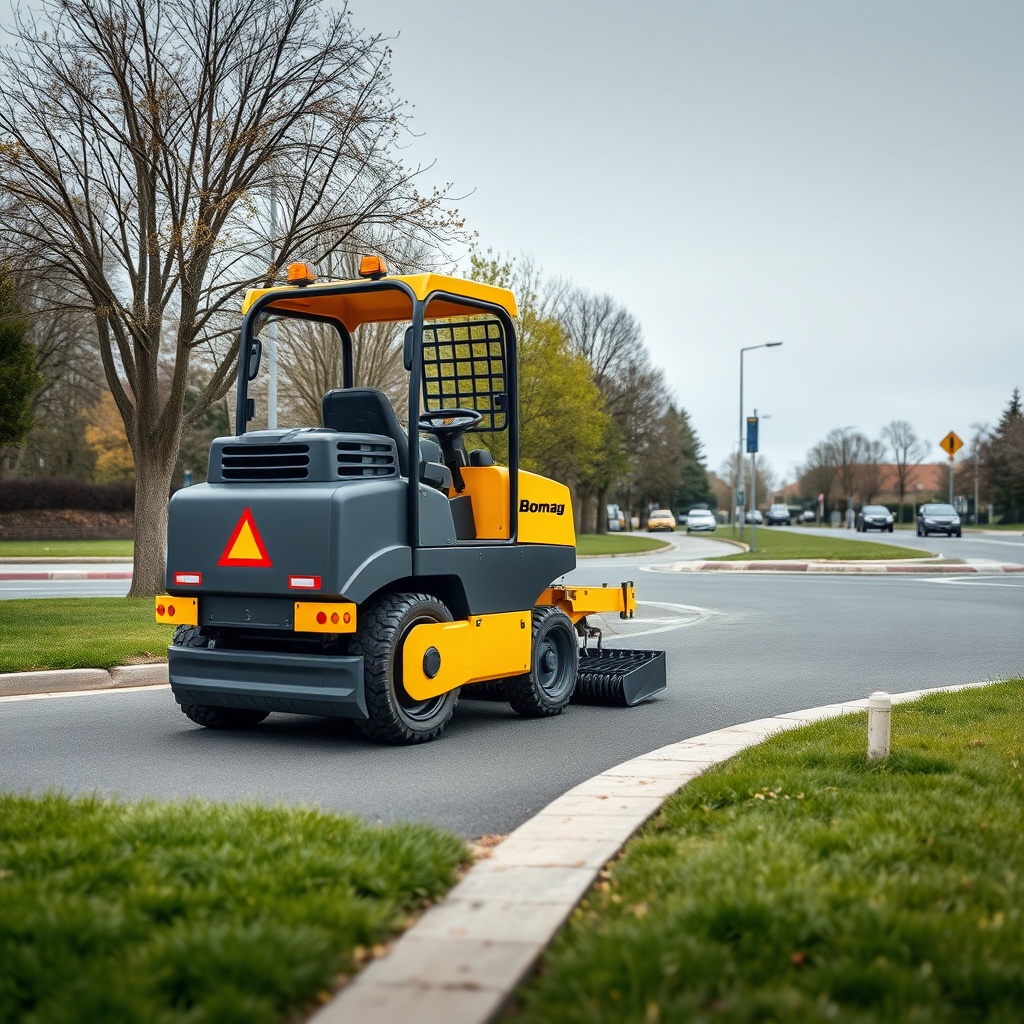
What site preparation and traffic management considerations are needed?
Using two paver units simultaneously on a UK highway requires careful traffic management (often under Chapter 8 of the Traffic Signs Manual). The work zone must accommodate both the AP655F, the BF 600 P-2, and their feed trucks – typically at least a 4.5 m wide lane closed. Ground preparation includes ensuring the sub-base is fully compacted and free of debris. Both pavers need a consistent supply of hot-mix asphalt, ideally from a nearby batch plant (<30 minutes travel time) to avoid material cooling. Pre-planning of start and stop points (transverse joints) is essential; the AP655F should always lay the reference edge first. During operation, the BF 600 P-2 must match its mat thickness and slope to the AP655F's laid course. A laser level or stringline is recommended for the secondary paver to maintain the correct vertical alignment. Furthermore, check the Caterpillar AP655F vs Bomag BF 600 P-2: Paver Comparison for Highways article for detailed dimensional differences affecting site access.
What owners say about running the Caterpillar AP655F and Bomag BF 600 P-2 together
Experienced UK contractors consistently praise the pairing for its balance of power and agility. One highway contractor operating out of Yorkshire notes, “We use the AP655F for the whole mainline stretch and run the BF 600 P-2 behind to pick up side roads and lay the surface on roundabouts. The smoothness numbers are better because we aren’t trying to squeeze a big paver into small radii.” Another owner from a Midlands infrastructure firm remarks, “The AP655F’s screed is top-notch for thickness control, but it’s the Bomag’s ECO heater that saves us fuel on site – we can keep it idling without burning through diesel. Our training time is cut in half on the BF 600 P-2.” Pros: excellent mat quality from both units, strong parts availability via UK dealers (Finning for Cat, Bomag UK for Bomag), and solid resale values after 5,000 hours. Cons: occasional sensor calibration drift on the AP655F’s grade system requiring dealer tech visits; the BF 600 P-2 has a smaller hopper than some competitors, meaning more truck cycles for high-tonnage jobs. Overall, the consensus is that this is a proven, reliable, and profitable pairing for UK contractors handling diverse paving projects from motorways to car parks.
Frequently asked questions about the Caterpillar AP655F and Bomag BF 600 P-2 paving train
Can the Bomag BF 600 P-2 be used as a main paver on small sites?
Yes, the BF 600 P-2 is fully capable as a standalone paver for car parks, driveways, and residential roads up to 4.5 m width. Its compact size and low weight make it ideal for jobs where access is limited and a large tracked paver like the AP655F would cause site damage or require excessive room.
What is the maximum road speed for the Caterpillar AP655F?
The AP655F has a maximum travel speed of 4.8 km/h, making it comfortable to move between job sites within a few miles, but it requires a low-loader for distances over 20 miles. The Bomag BF 600 P-2 travels up to 6.0 km/h and is also transport-ready on a low-bed trailer.
Are the control systems compatible for synchronized operation?
While the two machines come from different manufacturers, they can be synchronized through a common stringline or by using an operator-communicated pace. There is no direct machine-to-machine interface, so a skilled team is essential to maintain joint quality. Some contractors add aftermarket digital leveling kits to the BF 600 P-2 for closer integration.
How does the fuel efficiency compare between the two machines?
The AP655F typically consumes 12–16 litres per hour, while the BF 600 P-2 uses 6–9 litres per hour. However, the AP655F lays 2–3 times more tonnage per hour, so its efficiency per tonne of asphalt placed is actually better. The Bomag ECO heater reduces idle fuel consumption during lunch breaks or short delays.
What is the typical resale value after 5,000 operating hours?
A well-maintained Caterpillar AP655F can retain 55–65% of its original purchase price, translating to £125,000–£180,000 at the 5,000-hour mark. The Bomag BF 600 P-2 holds value similarly, with resale prices around £55,000–£75,000. Machine condition and service history heavily influence these figures.
Where can I find the complete specifications for both pavers?
For detailed technical data, visit our Caterpillar AP655F vs Bomag BF 600 P-2: Paver Comparison for Highways article covering weight, dimensions, screed types, and more. Your local Caterpillar dealer or Bomag representative can also provide machine-specific brochures.