
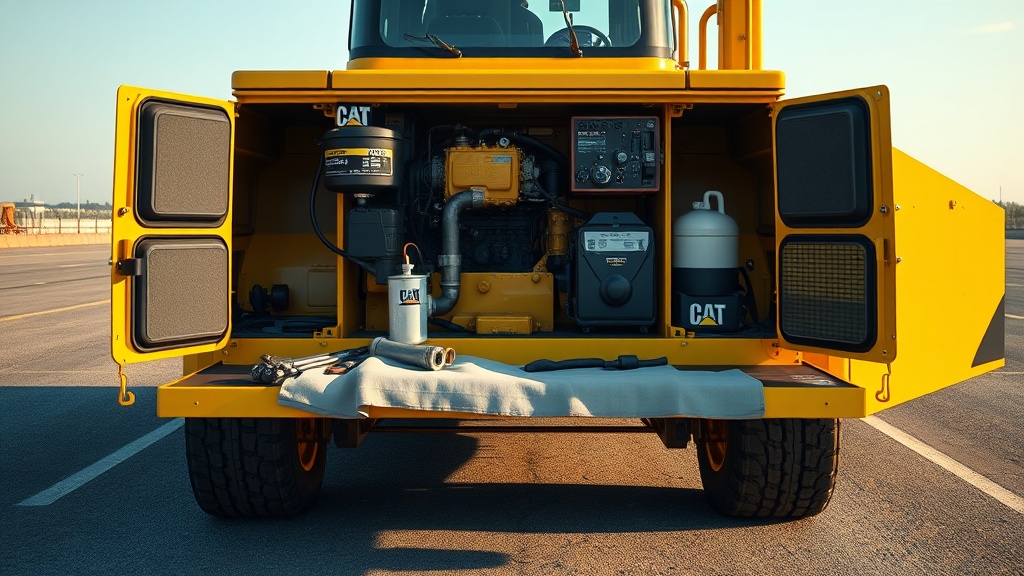
Introduction to Caterpillar AP555F Engine System Maintenance
Proper engine system maintenance is the cornerstone of maximizing uptime and prolonging the life of the Caterpillar AP555F asphalt paver. This comprehensive guide covers critical tasks, from oil changes and filter replacements to cooling system care and exhaust aftertreatment checks, all essential for peak performance on the job site. By adhering to a structured maintenance schedule, operators can avoid costly breakdowns and ensure consistent material flow and mat quality.
Why Does the Caterpillar AP555F Engine Require Specific Maintenance Intervals?
The Caterpillar AP555F is powered by a Cat C4.4 ACERT diesel engine, which operates under heavy loads, high ambient temperatures, and dusty conditions typical of asphalt paving. Following the recommended intervals—every 250 hours for oil and filter changes, 500 hours for fuel filters, and annually for coolant—is crucial. Neglecting these intervals risks premature wear of the fuel system components, reduced power output, and increased emissions. Regular oil analysis every 500 hours also helps detect coolant leaks or excessive wear before they escalate.
What Are the Critical Engine Oil and Filter Change Procedures?
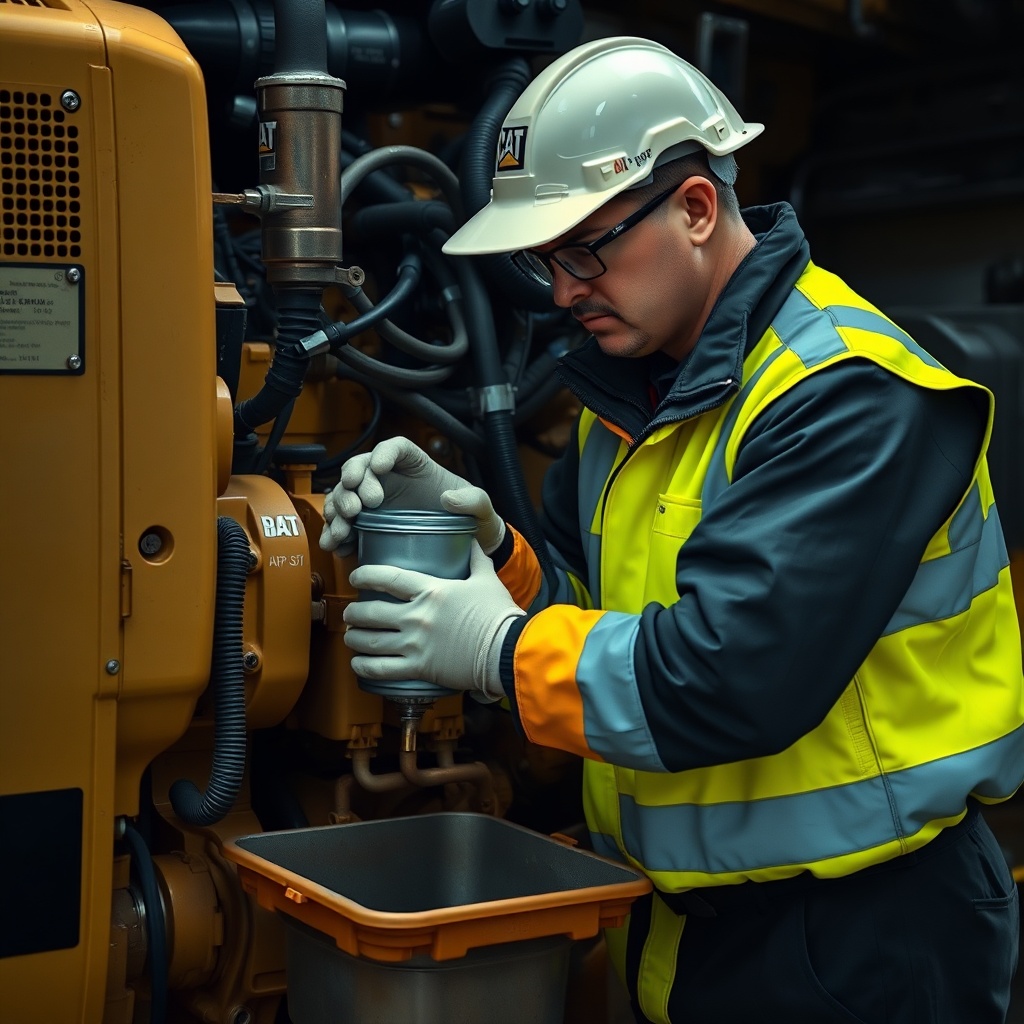
Engine oil and filter changes are the most frequent and impactful maintenance tasks. Use only Caterpillar DEO (Diesel Engine Oil) SAE 15W-40 or an equivalent API CJ-4 or CK-4 rated oil. The sump capacity is 15 litres (4.0 gallons) with filter. Steps include: warm the engine to operating temperature, shut it down, remove the drain plug (torque to 43 N·m), drain completely, replace the spin-on oil filter (pre-fill with clean oil) and o-ring, install a new drain plug gasket, and fill with fresh oil. Run the engine for three minutes, check for leaks, and then verify the oil level on the dipstick. Always dispose of used oil and filters at an approved recycling centre.
How to Inspect and Service the Air Induction and Cooling Systems?
The air induction system on the AP555F uses a dual-stage filter with a primary and secondary element. Daily checks include inspecting the dust cup for accumulation and cleaning the pre-cleaner if equipped. Replace the primary filter every 1,000 hours or when the restriction indicator shows red (vacuum exceeds 5 kPa). Never remove the secondary filter unless the primary is replaced. For the cooling system, routine pressure testing of the radiator cap and checking coolant level daily is essential. Every 2,000 hours, drain, flush, and refill the system using Caterpillar Extended Life Coolant (ELC) mixed 50/50 with distilled water. Inspect hoses for cracks, bulges, or soft spots, and replace any clamps showing corrosion. A clean cooling system ensures consistent engine temperature and prevents hydraulic system overheating.
What Are the Exhaust Aftertreatment System (ATS) Maintenance Requirements?
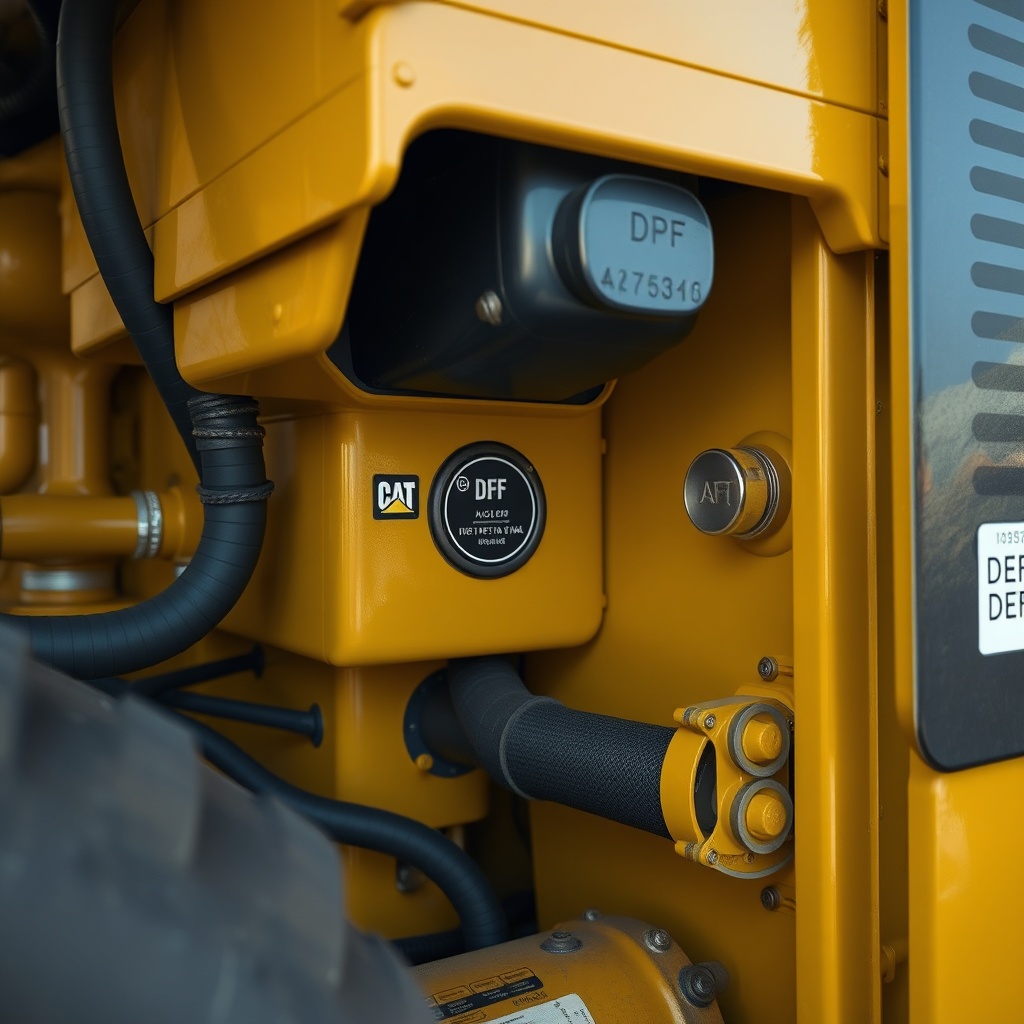
The AP555F complies with EU Stage IV / US EPA Tier 4 Final emissions standards, requiring a Diesel Particulate Filter (DPF) and Selective Catalytic Reduction (SCR) system. Key maintenance includes: checking diesel exhaust fluid (DEF) level daily (fill with 32.5% urea solution), inspecting DEF injector and lines for crystallisation, and monitoring the DPF ash load via the operator display. Stationary regeneration occurs automatically if the DPF becomes 85% loaded—ensure the engine is hot and the paver is parked in a well-ventilated area. Never manually abort a regeneration cycle. Ash cleaning by a Cat dealer is required every 4,500–5,000 hours. Also, inspect the exhaust manifold and turbocharger piping for leaks every 500 hours.
Comparison of Engine Specifications and Service Intervals
| Component / System | Specification | Service Interval | Notes |
|---|---|---|---|
| Engine Model | Cat C4.4 ACERT (Stage IV/Tier 4F) | N/A | Turbocharged, aftercooled, 4-cylinder |
| Rated Power | 106 kW (142 hp) at 2,200 rpm | N/A | Net power per ISO 9249 |
| Engine Oil (with filter) | 15 litres (4.0 gal) SAE 15W-40 | Every 250 hours | Use Caterpillar DEO or API CJ-4 |
| Oil Filter | Cat 1R-1808 (spin-on) | Every 250 hours | Replace together with oil |
| Fuel Filter (primary) | Cat 326-1644 (10 micron) | Every 500 hours | Water separator bowl drains daily |
| Fuel Filter (secondary) | Cat 326-1645 (2 micron) | Every 500 hours | High-pressure common rail |
| Air Filter (primary) | Cat 4N-9166 | Every 1,000 hours | Replace upon indicator or damage |
| Air Filter (secondary) | Cat 4N-9167 | Every 2,000 hours | Replace only with primary |
| Coolant Capacity | 22 litres (5.8 gal) | Yearly / 2,000 hours | 50:50 ELC with distilled water |
| DEF Fluid | 30 litres (7.9 gal) tank | Check daily | 32.5% urea solution (ISO 22241) |
| Valve Lash Adjustment | Intake: 0.30mm; Exhaust: 0.40mm | Every 3,000 hours | Cold engine, feeler gauge |
What Do Owners Say About AP555F Engine Reliability?
Experienced paving contractors and rental fleets generally praise the AP555F’s engine for its fuel efficiency and smooth operation, even under continuous loading on hot summer days. One owner in the UK noted, “We run two AP555Fs and the Cat C4.4 has never missed a beat. Follow the oil and filter schedule strictly, and the engine will easily hit 8,000 hours before an overhaul.” Another operator emphasised the importance of keeping the DPF system clean: “We ignored the regeneration warning twice, thinking it was a minor glitch—that cost us a £2,800 DPF cleaning bill. Now we never skip a parked regen.” A common point of feedback is that the DEF tank placement can be awkward to fill without spilling, especially in cramped laydown areas, but the overall drivetrain reliability offsets this minor inconvenience.
Frequently Asked Questions (FAQ)
Q1: How often should I change the engine oil on the AP555F?
Change the engine oil and filter every 250 operating hours, or every six months, whichever comes first. Use only a high-quality CJ-4 or CK-4 rated 15W-40 oil.
Q2: What causes the “Check Engine” light to come on during operation?
Common causes include a clogged diesel particulate filter (DPF), low DEF fluid level, or a faulty exhaust gas temperature sensor. Always consult the operator display for the specific diagnostic code before troubleshooting.
Q3: Can I perform a parked regeneration in an enclosed area?
No. Always perform regeneration in a well-ventilated outdoor area away from flammable materials. The exhaust reaches very high temperatures (up to 600°C) and can ignite combustibles.
Q4: How do I drain water from the fuel system?
Loosen the drain valve on the fuel/water separator (primary filter bowl) every day after the engine has cooled. Collect the water in a clear container and continue draining until clear fuel appears. Tighten the valve and dry any spills.
Q5: What is the recommended coolant type and change interval?
Use Caterpillar Extended Life Coolant (ELC) mixed 50/50 with distilled water. Replace it every 2,000 hours or annually. Never mix with conventional green coolant.
Q6: How do I check the engine belt tension?
Inspect the serpentine belt for cracks or glazing every 500 hours. Proper tension is achieved by a spring-loaded tensioner—no adjustment needed. Replace the belt if the tensioner arm is beyond its wear mark or if the belt has more than 6 cracks per 30 cm of length.