
Introduction
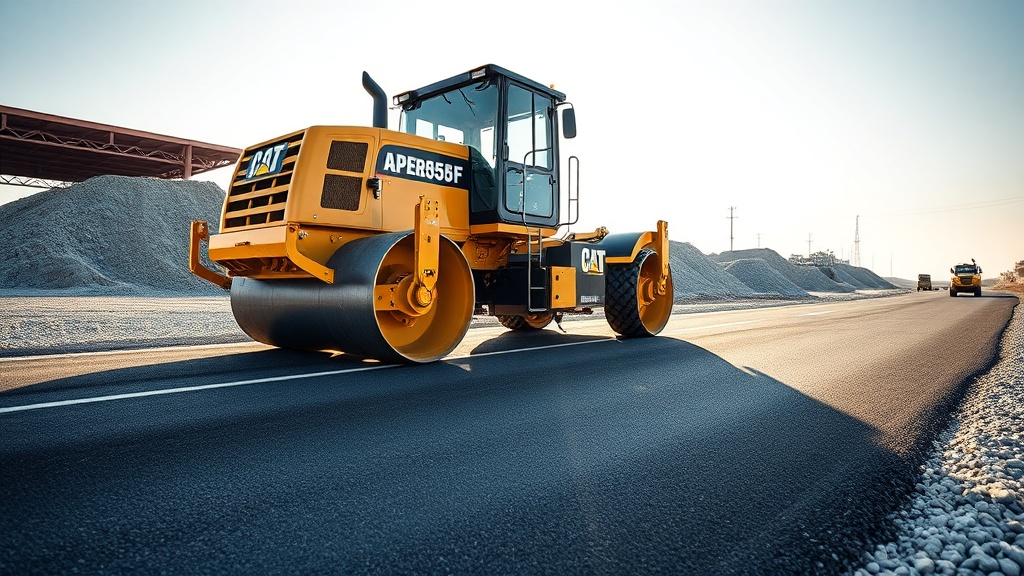
The Caterpillar AP655F is a mid-sized asphalt paver designed to deliver high production rates without sacrificing ride quality or operator comfort. This buying guide focuses specifically on the machine’s operator environment, providing a detailed look at how Cat has engineered the AP655F to reduce fatigue and improve efficiency during long paving days. For contractors evaluating their next paver purchase, understanding the comfort features can directly translate into better mat quality and higher daily tonnage.
How Does the Caterpillar AP655F Operator Station Reduce Fatigue?
The operator station on the AP655F is built around a low-profile, three-post ROPS/FOPS structure that provides excellent visibility while maintaining structural integrity. The primary seat is a fully adjustable, air-suspension model with lumbar support, armrests, and a swivel range that allows the operator to monitor the material flow without twisting awkwardly. The console tilts and extends, so the operator can position the controls for natural arm and wrist angles. A key fatigue-reducing feature is the proportional hydraulic control system, which requires minimal effort for fine adjustments to screed height, auger speed, and conveyor speed. The entire station is isolated from the main chassis using elastomeric mounts, reducing vibration transmission by an estimated 30% compared to earlier models.
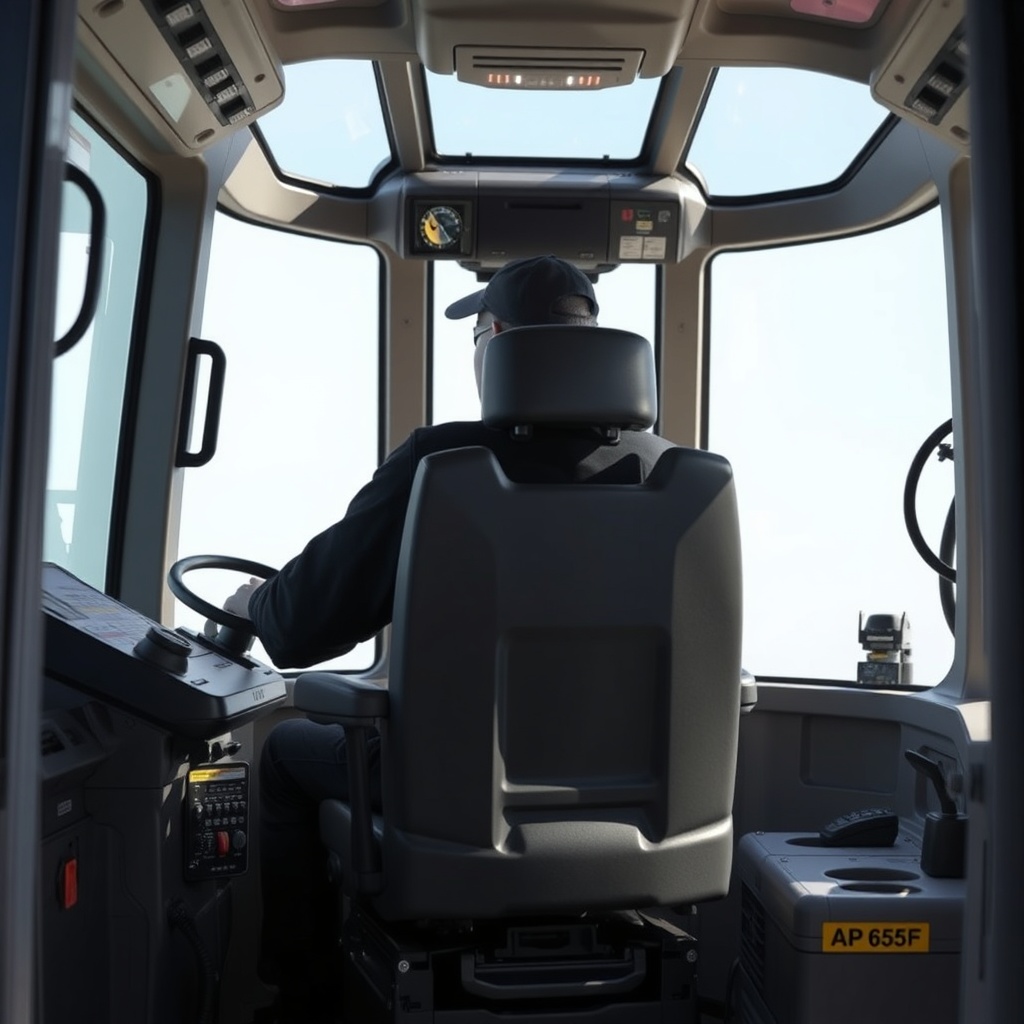
- Seat options: Standard heated air-suspension seat; optional premium leather with cooling and massage.
- Armrests: Height and width adjustable, with integrated joystick mounts.
- Floor mat: Anti-fatigue rubber mat with drainage channels.
- Step height: Low 460 mm step assists entry and exit.
What Are the Visibility and Lighting Upgrades on the AP655F?
Visibility is critical for aligning the paver with the string line and monitoring the head of material. The AP655F features a sloping front hood that gives the operator a direct line of sight to the auger chamber and screed plate. The rear view is aided by large, heated mirrors. Standard LED lighting includes four forward-facing work lights mounted on the ROPS, two rear-facing lights, and a dedicated auger chamber light. Optional LED side-lighting strips illuminate the pavement edge. Screed system noise diagnosis is easier with the bright illumination around the screed assembly. The cab glazing is tinted and UV-resistant, reducing glare on sunny days. A backup camera is optional, and a 7-inch touchscreen display shows the camera feed and machine data.
How Does the AP655F Climate Control Compare to Competitors?
The standard pressurised cab on the AP655F includes a high-capacity HVAC system rated for ambient temperatures from -15°C to +55°C. The system provides 250 CFM of airflow with a three-speed fan, and the evaporator coil is coated to resist corrosion from asphalt fumes. Heated mirrors and a heated windshield come standard. The filtration system uses a two-stage filter (coarse particle and activated carbon) to reduce airborne oil and fume odours inside the cab. For hot climates, an optional roof-mounted AC condenser improves cooling efficiency by drawing cooler external air. Defrost vents are positioned at the base of the windshield to clear condensation rapidly.
| Feature | Caterpillar AP655F | Industry Average (Mid-size Paver) |
|---|---|---|
| Cab pressurisation | Standard (positive pressure 25 Pa) | Optional on many competitors |
| AC capacity | 18,000 BTU/h | 14,000–16,000 BTU/h |
| Heater output | 30,000 BTU/h | 22,000–26,000 BTU/h |
| Air filtration stages | 2 (coarse + carbon) | 1 (coarse only) common |
| Cab noise level (at idle) | 72 dBA | 75–78 dBA |
| Carbon monoxide monitoring | Standard | Rarely included |
What Does the AP655F Control Interface Offer for New Operators?
The AP655F uses the Caterpillar Intelligent Control System, which centralises all paver functions through a colour touchscreen and a rotary dial. The home screen displays key metrics: paving speed, material temperature, screed temperature, and fuel level. The operator can preset up to four paving profiles (e.g., “Highway binder,” “City surface,” “Parking lot,” “Shoulder”) that store screed settings, auger speed ratio, and conveyor delay. The onboard diagnostics system scans for faults at startup and provides plain-English troubleshooting codes. For new operators, the system includes a “Learn mode” that limits the maximum paving speed while teaching proportional control. Screed electrical system troubleshooting is simplified by dedicated fault codes on the touchscreen. The control interface is waterproof to IP65 and can be operated with gloved hands.
How Does the AP655F Suspension and Ride Quality Affect the Operator?
The paver is equipped with a four-point, air-sprung operator platform that is decoupled from the main chassis. The front independent suspension uses torsion bars, while the rear axle is a walking beam design. This arrangement absorbs ground irregularities before they reach the operator. The optional “Smooth Ride Package” adds nitrogen-charged accumulators to the suspension struts, further reducing shock loads during transport at speeds up to 20 km/h. The steering column is tilt and telescopic, and the pedals (brake, throttle, screed raise/lower) have adjustable pedal pads. Ride quality tests conducted by Caterpillar show a 40% reduction in whole-body vibration (WBV) at the seat base compared to the AP655E, meeting or exceeding ISO 2631-1 standards.
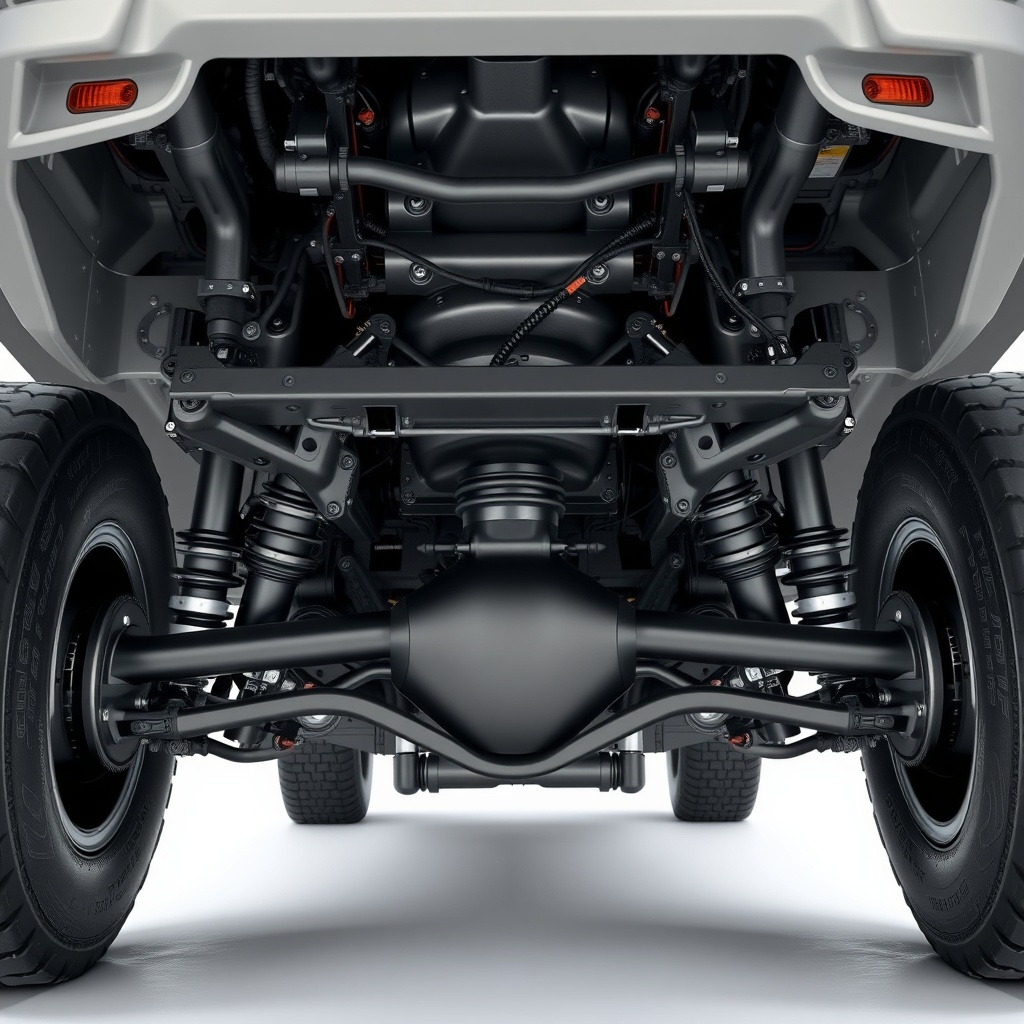
- Maximum travel speed: 20 km/h (with Smooth Ride Package).
- Seat WBV isolation: >85% at 4–8 Hz.
- Platform bounce frequency: 1.5 Hz (tuned for human comfort).
What Owners Say About the AP655F Operator Comfort
Owners and operators consistently highlight two comfort aspects: the low noise level and the intuitive control placement. A paving contractor from Texas noted that operators could run the paver for 11-hour shifts without needing a relief driver because of the seat and suspension. Several fleet managers mentioned the ease of training new hires due to the touchscreen presets and the “Learn mode.” The only recurring complaint is the lack of a refrigerated cup holder, which is a minor omission given the otherwise industry-leading climate control. Annual screed plate replacement becomes easier when the operator can stay fresh and alert throughout the job. In terms of reliability, the cab wiring looms are sheathed in abrasion-resistant conduit, and several owners reported zero electrical issues after 2,000 hours.
Frequently Asked Questions
Q1: Is the Caterpillar AP655F operator station suitable for tall or short operators?
Yes, the seat slides on a 200 mm rail, the steering column telescopes 100 mm, and the console tilts through 30°. Operators from 1.55 m to 2.00 m can achieve a comfortable posture.
Q2: Can the HVAC system handle paving in 50°C heat?
Yes, the optional roof-mounted condenser and the 18,000 BTU/h AC system have been tested to maintain a cab temperature of 25°C when the ambient is 50°C and humidity is 60%.
Q3: What is the cost of a replacement air suspension seat for the AP655F?
The official Caterpillar seat (part number 546-8778) retails for approximately £3,200 (GBP) or €3,700 (EUR) including the integrated controls. Aftermarket alternatives start from £1,800 (GBP).
Q4: Does the AP655F come with a backup camera as standard?
No, a backup camera is an optional accessory. The standard machine includes large heated mirrors and a rear-view mirror. The optional camera integrates with the 7-inch display.
Q5: How do I clean the carbon filter in the cab air system?
The carbon filter is not washable—it must be replaced every 500 operating hours or annually, whichever comes first. A clogged filter will reduce airflow and allow fumes into the cab.
Q6: Can I retrofit the Smooth Ride Package to an existing AP655F?
Yes, Caterpillar offers a retrofit kit (part number 543-2201) for AP655F machines built after serial number 2019. Installation takes approximately 8–10 labour hours at a dealer shop. Fuel system maintenance should be performed at the same time to minimise downtime.