
Introduction
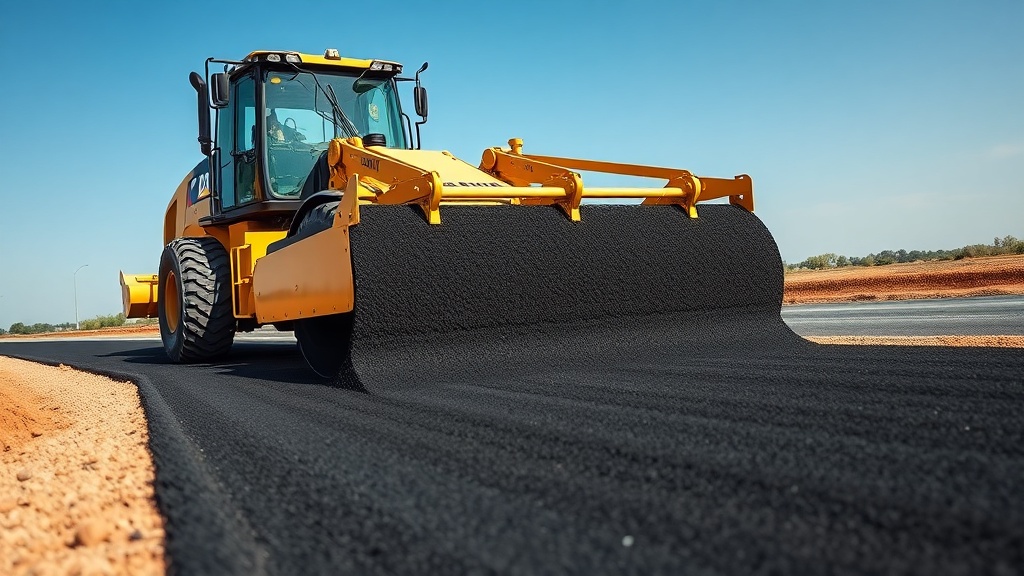
The Caterpillar AP655F is a workhorse in the paving industry, renowned for its reliability and precision. Central to its performance is the screed plate, which directly influences mat quality and smoothness. Understanding screed plate wear indicators is crucial for maintaining paving standards and avoiding costly downtime. This guide provides practical maintenance insights for operators and fleet managers.
Why Do Screed Plate Wear Indicators Matter for the Caterpillar AP655F?
Screed plates on the Caterpillar AP655F are exposed to constant abrasion from hot asphalt mix, aggregate particles, and thermal cycling. Over time, the plate surface degrades, leading to inconsistent mat texture, increased drag, and potential mix tearing. Wear indicators help operators assess when replacement is necessary, preventing premature failure and reducing operating costs.
Neglecting wear can result in poor ride quality and project rework. The average replacement cost for a complete set of screed plates on an AP655F ranges from £1,200 to £1,800 depending on thickness and alloy, making early detection a cost-effective strategy. Refer to the Caterpillar AP655F Screed Plate Replacement Procedure for step-by-step removal instructions.
How Can Operators Visually Inspect Screed Plate Wear on the AP655F?
Visual inspection is the first line of defence. Operators should examine the screed plates during daily pre-start checks and after each paving job. Key indicators include:
- Surface grooves and scoring: Deep lines indicate aggregate abrasion.
- Thinning edges: The front edge (leading edge) often wears faster.
- Discolouration: Blue or brown patches suggest overheating or uneven wear.
- Curling or warping: Signs of thermal stress or impact damage.
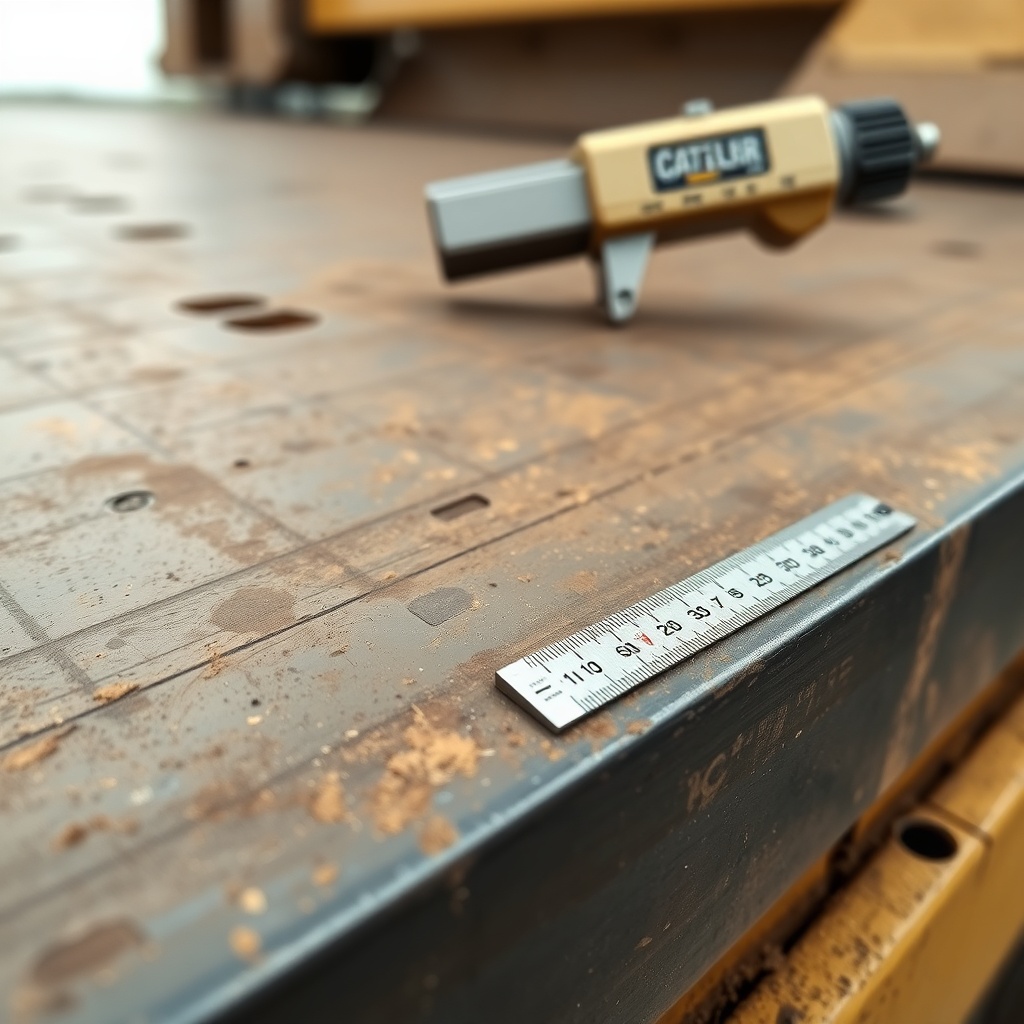
Use a caliper gauge to measure remaining thickness. Standard new plates measure 12–14 mm thick. Replace when thickness drops below 8 mm to maintain structural integrity. The Caterpillar AP655F Screed Wear Parts Replacement Guide provides further details on part numbers.
What Tools and Techniques Are Used for Wear Measurement?
Accurate measurement requires specific tools. A flatness gauge checks for distortion, while a depth micrometer measures remaining material. For the AP655F, follow these steps:
- Allow the screed to cool completely.
- Clean the plate surface with a wire brush and compressed air.
- Place the micrometer at three points: front edge, centre, and rear edge.
- Record the average thickness.
Comparison with factory specs is vital. Below is a severity table based on measurements:
| Thickness (mm) | Wear Severity | Recommended Action | Estimated Cost (GBP) |
|---|---|---|---|
| 12–14 | New / Minimal | No action | — |
| 10–12 | Moderate | Monitor monthly | — |
| 8–10 | High | Plan replacement within 50 hours | £1,400–£1,800 |
| < 8 | Critical | Replace immediately | £1,800+ |
How Do Operating Conditions Affect Wear Rates on the AP655F?
Several factors accelerate wear on Caterpillar AP655F screed plates:
- Aggregate type: Hard, sharp aggregates like granite increase abrasion by up to 30% compared to softer limestone.
- Mix temperature: Asphalt above 160°C accelerates thermal fatigue and plate deformation.
- Paving speed: Continuous operation at high speeds (above 15 m/min) creates greater friction and heat.
- Maintenance intervals: Skipping screed heating system checks leads to uneven thermal expansion and premature wear.
Operators in limestone regions may see plate life of 2,500–3,000 tonnes, while granite-heavy jobs reduce that to 1,500–2,000 tonnes. Logistic planning based on aggregate type can optimise replacement schedules.
What Are the Signs of Uneven Wear and How to Address Them?
Uneven screed plate wear manifests as angle deformation across the width. Signs include:
- Scalloped edges: More wear at the outer ends.
- Centre dips: Higher wear in the middle due to poor material flow.
- Step wear: Abrupt changes in thickness near bolt holes.
To correct uneven wear, first inspect the screed electrical system for misalignment. Then, adjust the auger height and material feed to ensure consistent mix distribution. Rotating plates (if design permits) can extend service life. In severe cases, replacement of the entire screed plate set is necessary—costing around £2,200 for genuine Caterpillar parts.
What Owners Say About Screed Plate Wear on the AP655F
Experienced operators and fleet managers report mixed feedback. Many praise the AP655F’s robust screed design, noting that with proper maintenance, plates last up to 3,500 tonnes in moderate conditions. However, owners in high-aggregate regions criticise the cost of genuine replacement plates, leading some to explore aftermarket alternatives.
“The wear indicators are clear if you know what to look for. I catch issues early by checking thickness every 500 tonnes. Saving money on early replacement,” says a UK contractor based in London. Another owner recommends pairing wear checks with fuel system maintenance to reduce overall downtime during service intervals.
Frequently Asked Questions
How often should I inspect AP655F screed plates?
Inspect before each shift and after every 500 tonnes of paving. Use visual checks and a micrometer for accuracy.
What is the minimum thickness for AP655F screed plates?
Replace plates when thickness reaches 8 mm. Operating below this risks plate breakage and mat defects.
Can I use aftermarket screed plates on the AP655F?
Yes, but ensure they meet OEM hardness specs (typically 45–50 HRC). Aftermarket plates cost £800–£1,200 per set but may wear faster.
Does the heating system affect plate wear?
Yes. Uneven heating causes thermal expansion, leading to warping and accelerated wear. Regular system checks prevent this. See the Screed Heating System Guide.
How long do screed plates last on the AP655F?
In moderate conditions (standard aggregates, temps around 150°C), plates last 2,500–3,000 tonnes. Hard aggregates reduce this to 1,500–2,000 tonnes.
What are the consequences of ignoring worn plates?
Ignoring wear leads to mat tearing, poor smoothness, increased fuel consumption due to drag, and potential screed damage. Replacement costs rise significantly.