Introduction
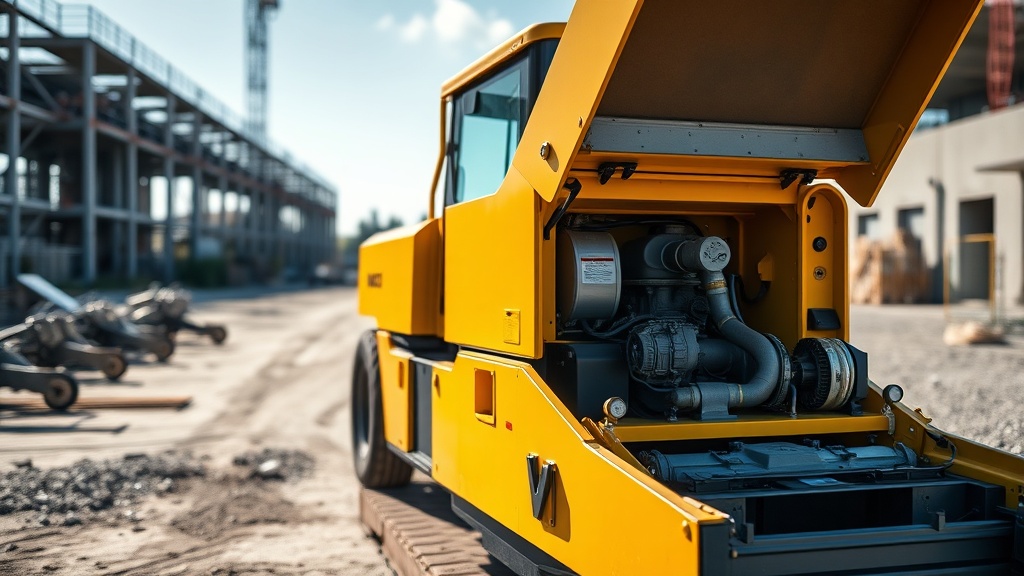
Engine overheating on the Bomag BF 600 P-2 paver can halt a paving job within minutes, leading to costly downtime and potential engine damage. This troubleshooting guide examines the most common causes of excessive heat in this machine’s cooling system and provides ordered repair steps. Proper diagnosis can save operators hundreds of pounds in unnecessary service calls and parts replacement.
What Are the Primary Causes of Engine Overheating on the Bomag BF 600 P-2?
Several factors can push the coolant temperature beyond safe limits. Understanding the root cause is essential before replacing components.
- Coolant Level Loss: A low coolant level due to leaks at hose connections, the water pump seal, or the radiator core itself reduces heat transfer. Top off with a 50/50 mix of water and recommended antifreeze. A pressure test at 1.2 bar is advised.
- Radiator Blockage: The BF 600 P-2 operates in dusty environments. Core debris, from straw to bituminous dust, restricts airflow. Clean the radiator fins with compressed air (blowing from the engine side outward) every 50 operating hours.
- Thermostat Failure: A thermostat stuck in the closed position prevents coolant circulation. Symptoms include rapid temperature rise while the lower radiator hose remains cold. Replacement cost: approximately £45 for the correct 82°C unit.
- Water Pump Failure: A failing water pump impeller (often eroded by cavitation or corrosion) reduces flow. Check for weep hole leakage or play in the pump shaft. A genuine Bomag water pump costs around £210.
- Fan Clutch Malfunction: The viscous fan clutch may not engage fully at high temperature. Test by listening for reduced fan roar when the engine is hot. A new fan clutch assembly runs about £175.
How to Diagnose a Blocked Radiator on a Bomag BF 600 P-2?
A blocked radiator is the most common overheating culprit. Follow this step-by-step diagnostic procedure.
Visual Inspection
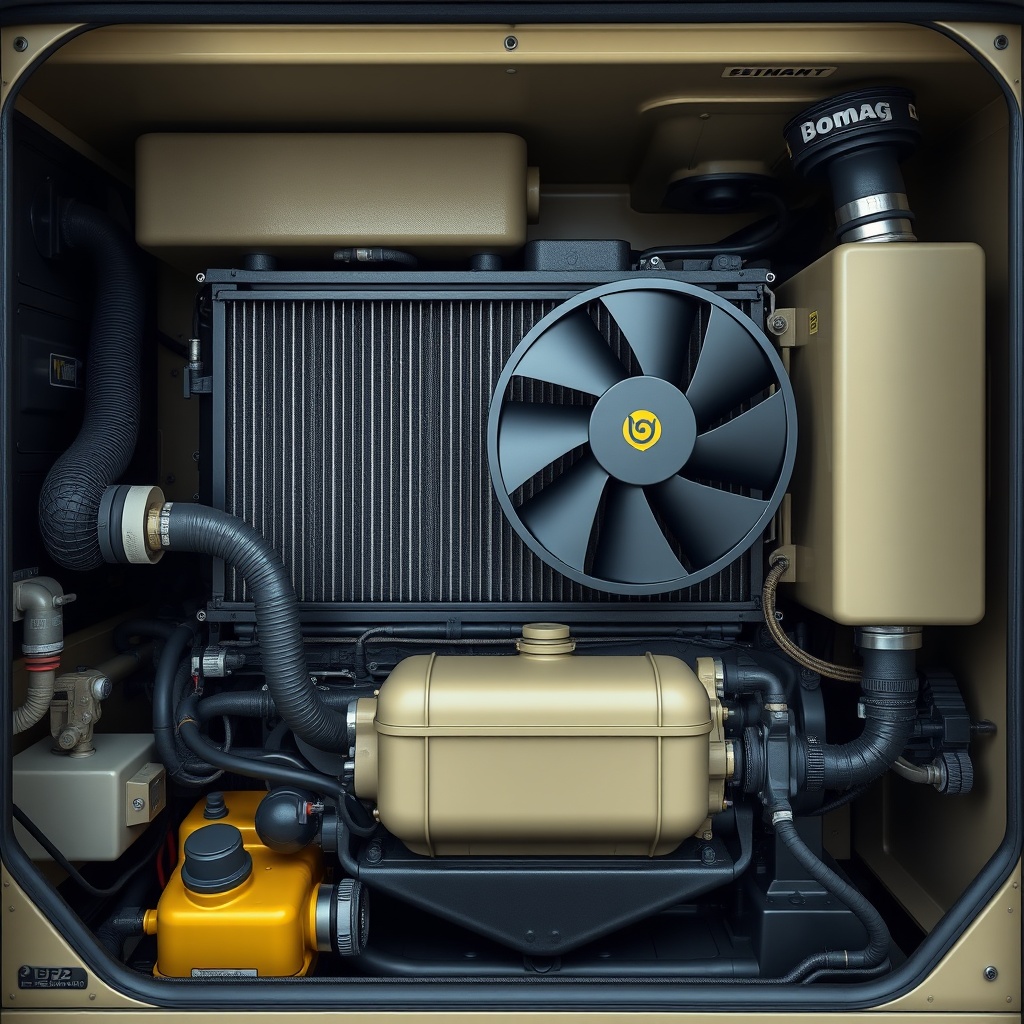
Remove the engine cover and inspect the radiator core. Look for flattened fins, accumulated debris, or oil contamination. Use a flashlight to check for light passing through – if more than 20% of the core is blocked, cleaning is necessary.
Temperature Gradient Test
With the engine at operating temperature (85°C-90°C), use an infrared thermometer to measure the radiator surface. A normal radiator shows a temperature drop of 15°C-20°C from top to bottom. A blocked radiator will show cold spots or a uniform high temperature across the core.
Airflow Restriction Check
Hold a piece of paper against the radiator grille with the engine running at high idle. If the paper does not stay firmly attached, the fan is not pulling adequate airflow, indicating blockage or fan clutch failure.
| Severity Level | Blockage (%) | Temperature Rise Above Normal | Recommended Action |
|---|---|---|---|
| Mild | 10-20% | 5-10°C | Clean with compressed air; inspect every 25 hours |
| Moderate | 20-40% | 10-20°C | Remove radiator; pressure wash with degreaser |
| Severe | 40-60% | 20-30°C | Radiator removal and recoring; check for hidden damage |
| Critical | >60% | >30°C | Replace radiator assembly; inspect fan and shroud |
Why Is the Coolant Temperature Spiking Under Load?
Operators often report that the BF 600 P-2 runs fine at idle but overheats once paving begins. This points to issues that manifest only under high engine load (around 2,200 rpm).
- Fuel Injection Timing: Retarded injection timing increases exhaust temperature, which in turn raises coolant temperature. Have a diesel specialist check injection pump timing – deviation beyond 2° can cause overheating.
- Turbocharger Issues: A sticking wastegate or restricted air intake increases combustion temperatures. Inspect the turbo actuator linkage and clean the air filter. A restricted air filter can add £150 in fuel costs per week from poor combustion.
- Hydraulic Oil Cooler Contamination: The hydraulic cooler sits ahead of the radiator. If it is clogged with debris, it preheats the air entering the radiator. Clean both coolers simultaneously.
- Exhaust Restriction: A collapsed inner liner in the exhaust pipe or a blocked Diesel Particulate Filter (DPF) creates backpressure, raising engine temperature. Check exhaust backpressure at the sensor port – should not exceed 0.35 bar at full load.
What Coolant System Components Should Be Inspected First?
Step-by-step component inspection reduces guesswork. Start with the cheapest and most accessible parts.
Radiator Cap
Test the radiator cap sealing pressure (nominal 1.2 bar). A defective cap allows coolant loss through overflow – the engine runs low and hot. Cost of a genuine cap: £28. Replacement interval: every two years.
Hoses and Clamps
Inspect all coolant hoses for soft spots, bulges, or chafing. Pay special attention to the lower radiator hose, which can collapse under suction if the inner spring is corroded. Replace all five hoses (upper, lower, bypass, heater, and overflow) for about £120.
Water Pump
Remove the drive belt and spin the water pump pulley by hand. Feel for roughness or wobble. Check for coolant residue at the weep hole. A leaking pump must be replaced immediately to avoid bearing seizure.
Thermostat
Remove the thermostat and place it in a pan of water with a thermometer. It should begin opening at 78°C and be fully open at 92°C. If it stays closed or opens late, replace it.
For broader electrical diagnostics related to the screed, refer to the Bomag BF 600 P-2 Screed Electrical System Troubleshooting Guide.
How to Perform a Cooling System Pressure Test on a Bomag BF 600 P-2?
A pressure test reveals external and internal leaks quickly. This procedure should be done every 500 hours or whenever overheating is persistent.
Tools Needed
- Coolant pressure tester (1-2 bar range, with proper adapter for the radiator cap neck)
- Radiator cap tester
- Clean rags
- Distilled water for topping up
Procedure
1. Ensure engine is cold (below 30°C). Remove the radiator cap carefully.
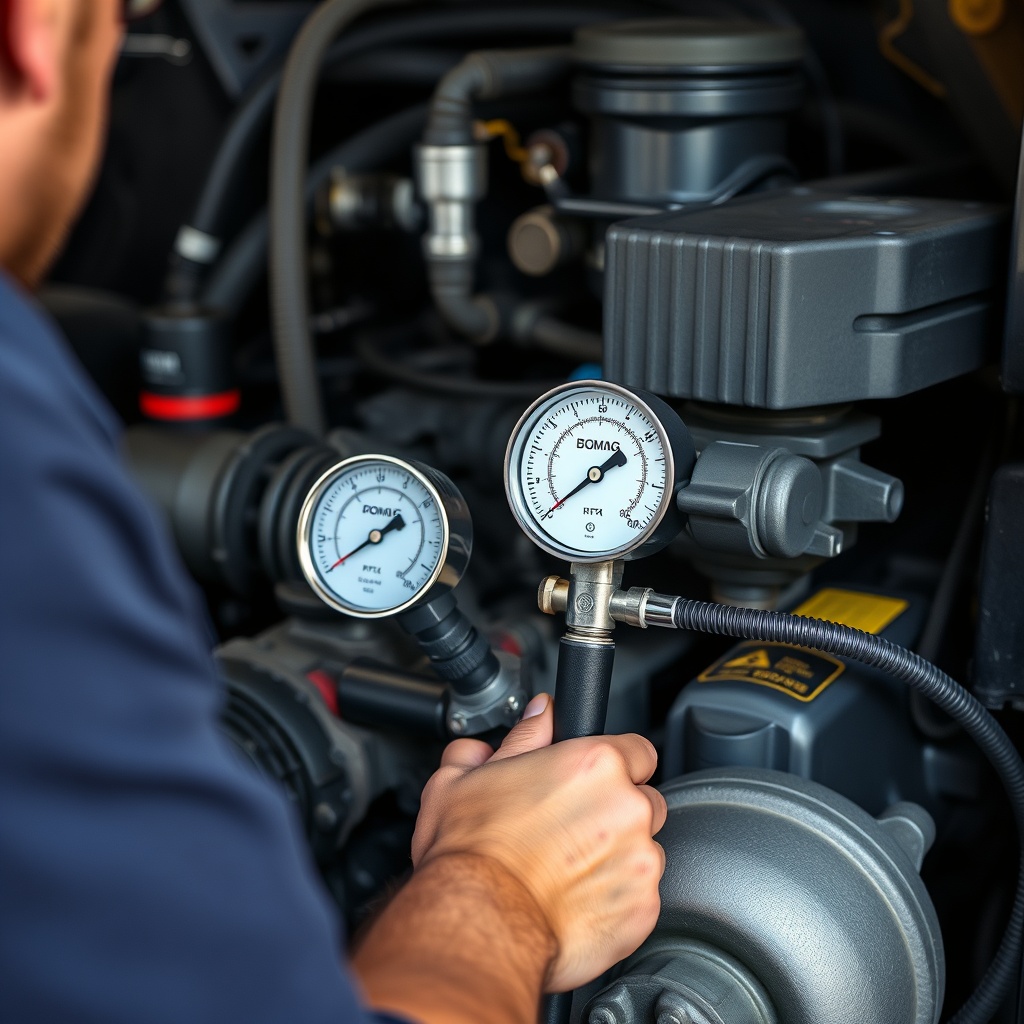
2. Attach the pressure tester to the radiator filler neck. Pump to 1.2 bar (the cap rating).
3. Observe the gauge for two minutes. A drop of more than 0.1 bar indicates a leak.
4. While pressure is applied, inspect all hose connections, the water pump weep hole, the freeze plugs on the engine block, and the heater core connections. Bubbles indicate a leak point.
5. If pressure holds but the engine still overheats, suspect a head gasket leak. A combustion leak tester (fluid that changes colour from blue to yellow) can confirm exhaust gases in the coolant. Cost of a test kit: £35.
6. If the head gasket is compromised, repair costs range from £1,200 to £2,500 depending on labour and machining of the cylinder head.
To improve overall machine performance, consider reading the Bomag BF 600 P-2 Screed System Performance Enhancement Tips.
What Owners Say About Bomag BF 600 P-2 Overheating Issues
Feedback from experienced operators across the UK and Ireland provides practical insight. Many note that the BF 600 P-2 is a robust machine but requires disciplined cooling system maintenance.
“The first thing we check when an overheating alarm sounds on our BF 600 P-2 is the radiator. It’s amazing how much debris can accumulate in a single shift on a dusty site. We now blow it out every morning. It costs nothing but saves us from losing half a day’s production,” says Gareth from Midlands Paving.
Another common observation comes from Scottish contractor Duncan: “After replacing the thermostat twice and still seeing temperature spikes, we discovered the fan clutch wasn’t engaging fully. A new clutch cost £175 and solved the problem. The viscous coupling can wear out gradually, and you won’t notice until the engine is really hot.”
Operators also advise checking the hydraulic oil cooler first if the machine has more than 3,000 hours. “The cooler gets packed with fines that you can’t see from the front. Pull it off and pressure wash it from the back side. That alone dropped our operating temperature by 8°C on a hot day,” reports James, a fleet manager for a London surfacing company.
For those undertaking more involved repairs, the Bomag BF 600 P-2 Screed Plate Replacement Procedure might be of interest for related undercarriage work.
Finally, multiple owners stress the importance of using genuine Bomag coolant and not mixing brands – electrolysis from mixed coolants can erode cylinder liners and cause invisible overheating.
Frequently Asked Questions
- Q: What is the normal operating temperature range for a Bomag BF 600 P-2 engine?
A: Normal coolant temperature should sit between 82°C and 92°C under load. The thermostat begins opening at 78°C and is fully open by 92°C. Above 98°C, the warning light activates; above 105°C, the engine should be shut down immediately. - Q: Can using the wrong coolant cause overheating in the BF 600 P-2?
A: Yes. Using a coolant without the correct silicate or OAT (Organic Acid Technology) formulation for the Perkins 1104 engine can cause scaling inside the cooling passages. This reduces heat transfer and can raise operating temperatures by 5-10°C. Always use a coolant meeting Perkins specification. - Q: How often should the cooling system be flushed on this machine?
A: Bomag recommends a full coolant change and system flush every 2,000 hours or two years, whichever comes first. However, if operating in dusty conditions, a flush every 1,000 hours helps prevent sludge build-up. Cost of a flush with genuine coolant and distilled water: about £90. - Q: Why does my BF 600 P-2 overheat only when the ambient temperature is above 25°C?
A: This strongly suggests a marginal cooling system that cannot shed enough heat under extreme conditions. The most common fix is to upgrade the fan clutch to a heavy-duty version or ensure the radiator and oil cooler are thoroughly cleaned. Check also that the engine side panels are properly sealed to force air through the radiator. - Q: What is the average repair cost for an overheating Bomag BF 600 P-2?
A: Costs vary widely. A simple radiator cleaning costs £80-£150 at a shop. Replacing a thermostat and coolant costs about £120. A water pump replacement runs £300-£400. Severe internal engine damage from chronic overheating can exceed £3,000 for a rebuild. - Q: Is it safe to run the BF 600 P-2 without the fan shroud for easier access?
A: No. The shroud is critical for proper airflow direction. Running without it can cause a 20-30% reduction in air flow, leading to rapid overheating, especially under load. Always reinstall the shroud after any radiator work.
For further reading on material handling, see the Bomag BF 600 P-2 Material Feed System Troubleshooting Guide and for undercarriage reliability, explore the Bomag BF 600 P-2 Track System Maintenance: A Comprehensive Guide.
For upgrades to the material delivery system, the Bomag BF 600 P-2 Material Feed System Upgrade Guide offers additional efficiency gains.